

Last week I assigned an architectural masterpiece to the wrong Roman emperor and so I feel obliged to correct that error. Caracalla who ruled extravagantly in the early 3rd century AD – no lie there – did build an enormous SPA complex for about 3000 people, only not in the center of Rome but a little bit to the south, along the course of the ancient ‘highway’ which connected the capital with the ‘heel of the Italian boot’ at the important port of modern Brindisi. I have found it as both Brindisium and Brundisium, so I’m not sure which one is correct. The highway is called Via Appia Antica and it has tombs, villas, temples and many other interesting things lining along it. The road used to start at the town center but I recommend that you visit the Appian Way starting from Caracalla’s Baths, especially if you have only one day for it as we did. I will repeat myself but time is never enough in Rome.
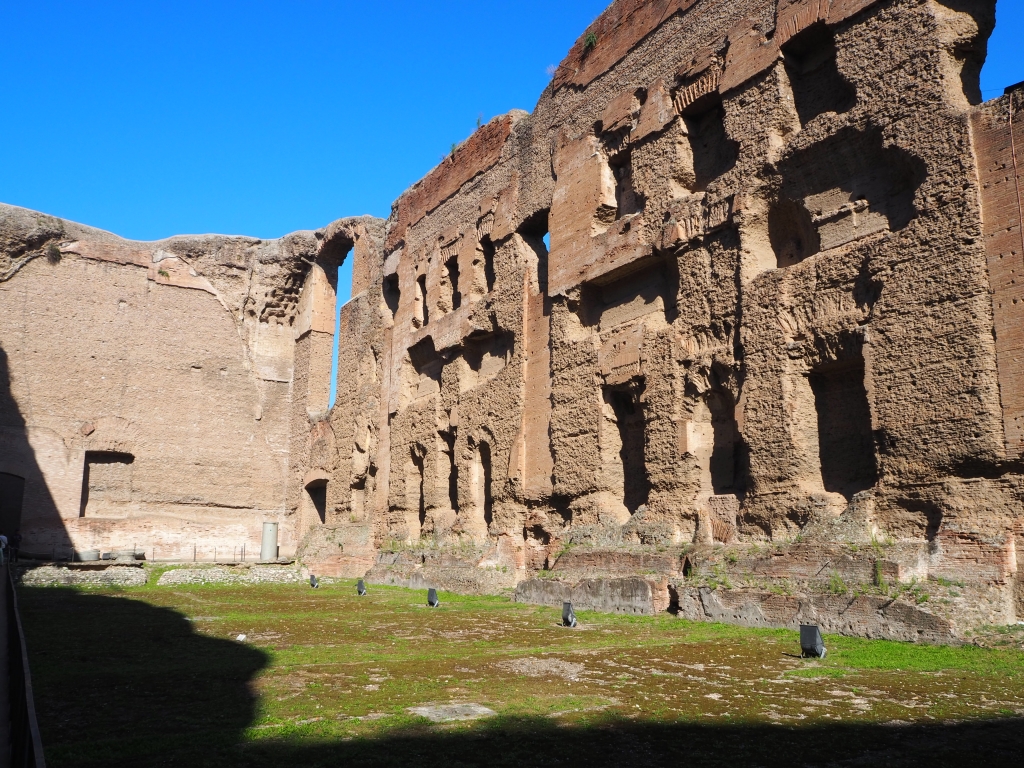
The Baths of Caracalla or rather what’s left of them are monumental even today. I offer as an example the above view from the pool (called natatio) and what remains from the surrounding three-storey walls with statue niches. I personally could not catch the whole complex on photo. They have preserved almost the whole of nearby dressing rooms, massage rooms and other rooms with unknown purpose; at the two ends, there are huge inner yards which were surrounded by two-storey buildings. At least one of them was a wrestling school (not sure about the other one), the ring being downstairs and various service rooms – upstairs. One can also see, to my greatest delight, quite many mozaics including polychrome ones which is very rare in premises meant for the ordinary people. But we already agreed that Caracalla was the king of extravagance.
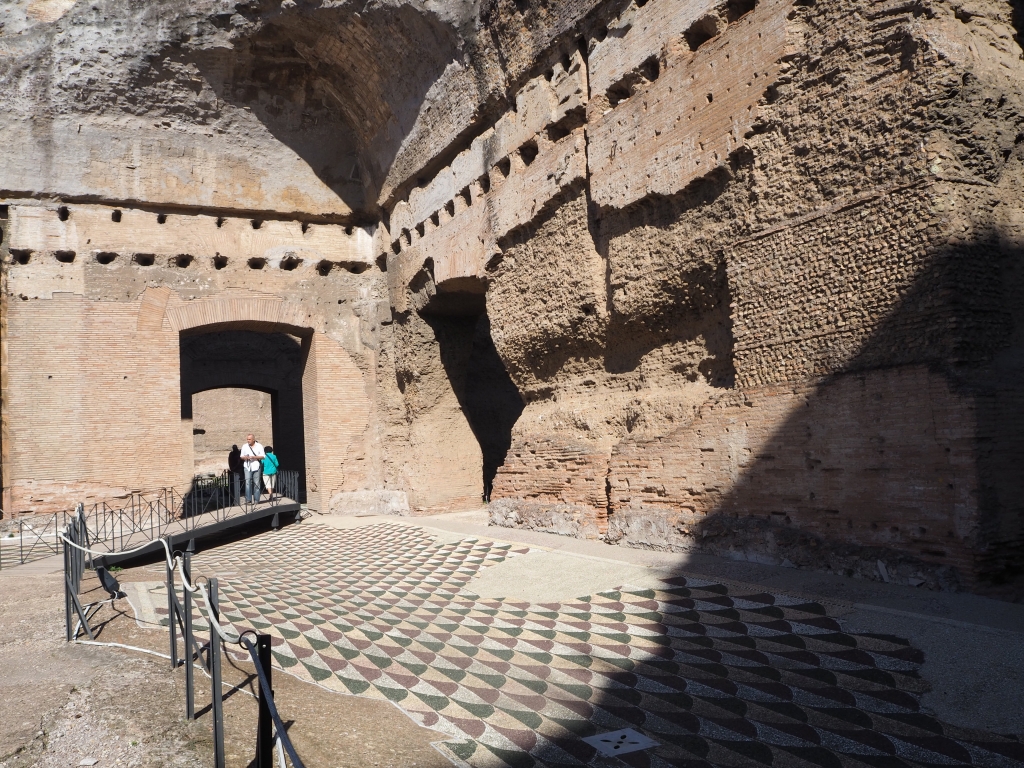
Recently they opened the basements for visitors and there you may see the ovens which were burning under the pools and warming the water up. The garden which lied in the middle of the complex is still here and if you had a bit more time, which we know you never have in Rome, sitting casually amidst the greenery would be a real pleasure. Around the garden, there were more schools, a library and other important buildings but there’s little left of them now. You can continue down the ancient Via Appia to the south-southeast from the Caracalla Baths. If you decide to visit the Appian Way on foot as we did, I recommend you do it in the days when driving is forbidden – as we did NOT. The street is narrow and there are almost no sidewalks, despite the fact that it was Romans who invented the sidewalk –
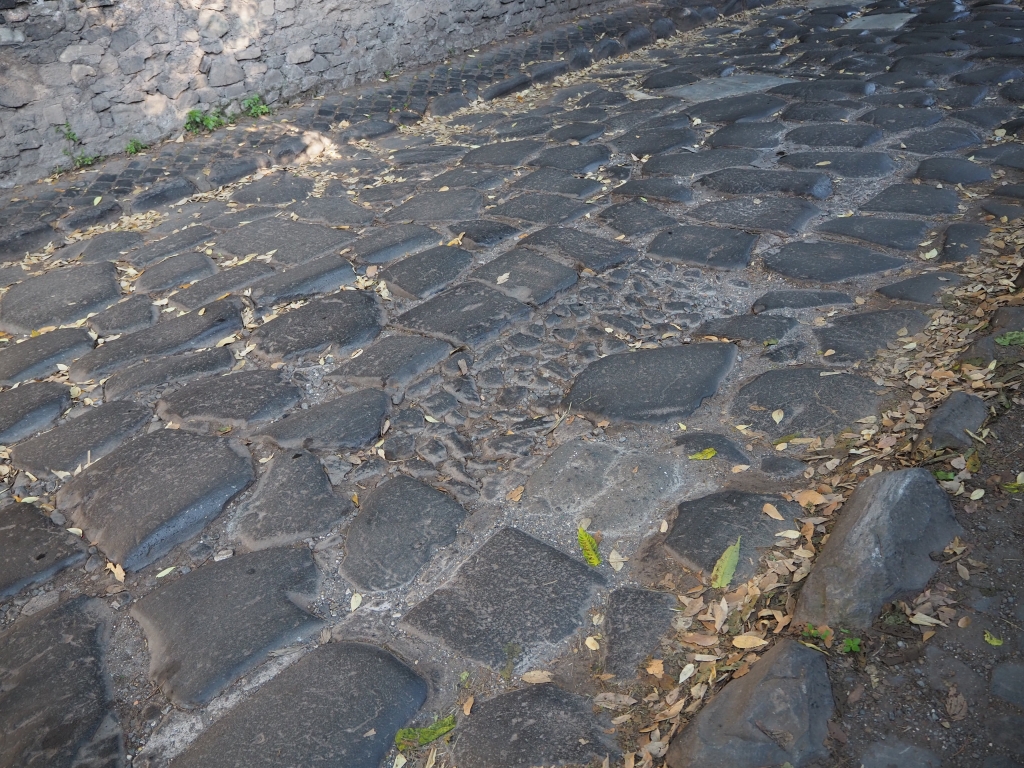
Well, Via Appia does not look like this all the time; I chose this picture for a more dramatic effect. From the Baths of Caracalla, you go to the Gate of Aurelian which is located on the Wall of Aurelian from the late 3rd century AD and is another amazing Roman idea. The emperor Aurelian decided that he was rather annoyed by some pushy Goths and he had to build a defense wall around the center of his town. So far, nothing unheard of, until you find out what the man saw as the ‘center of Rome’. His modest citadel had the size of 14 square kilometers! This is what call a broad center. At some Renaissance point, some pope deicded to renovate the wall, added a more monumental gate to that of Aurelian and called it San Sebastian as it is known today.
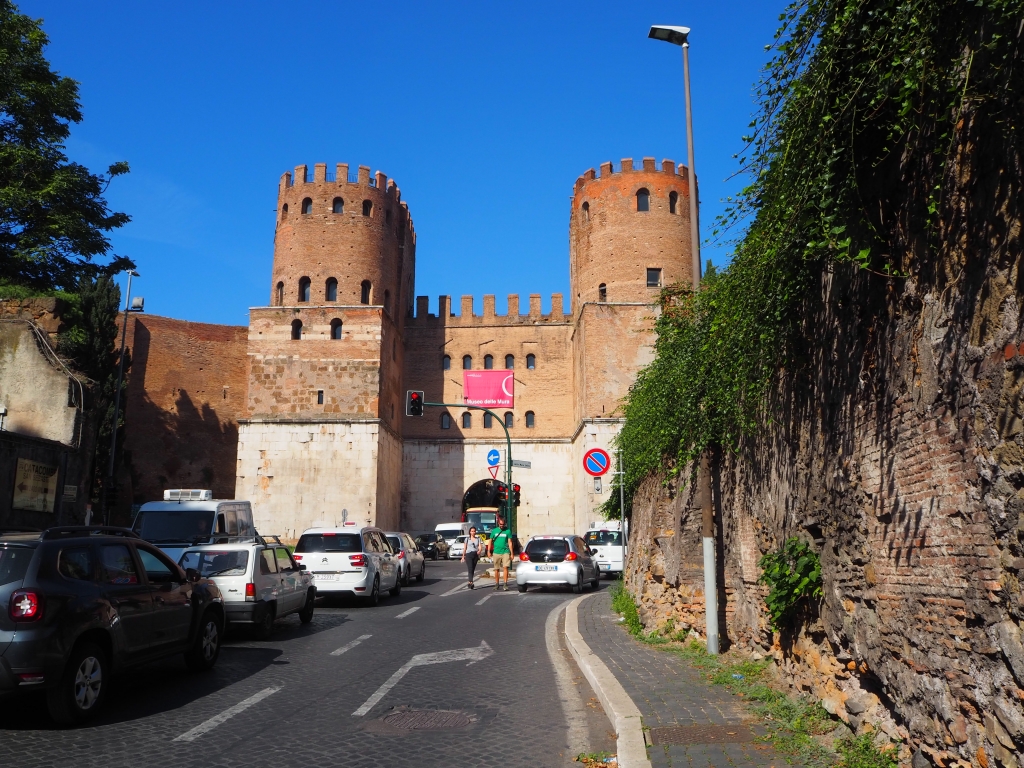
It is not even a gate but a whole building on several floors with towers and everything standing over the tunnel where Via Appia passes. Not long ago, the building was renovated and there is a little museum inside, free when we went. I was happier about the fact that they opened access to some parts of Aurelian’s old wall too and now you can walk inside.
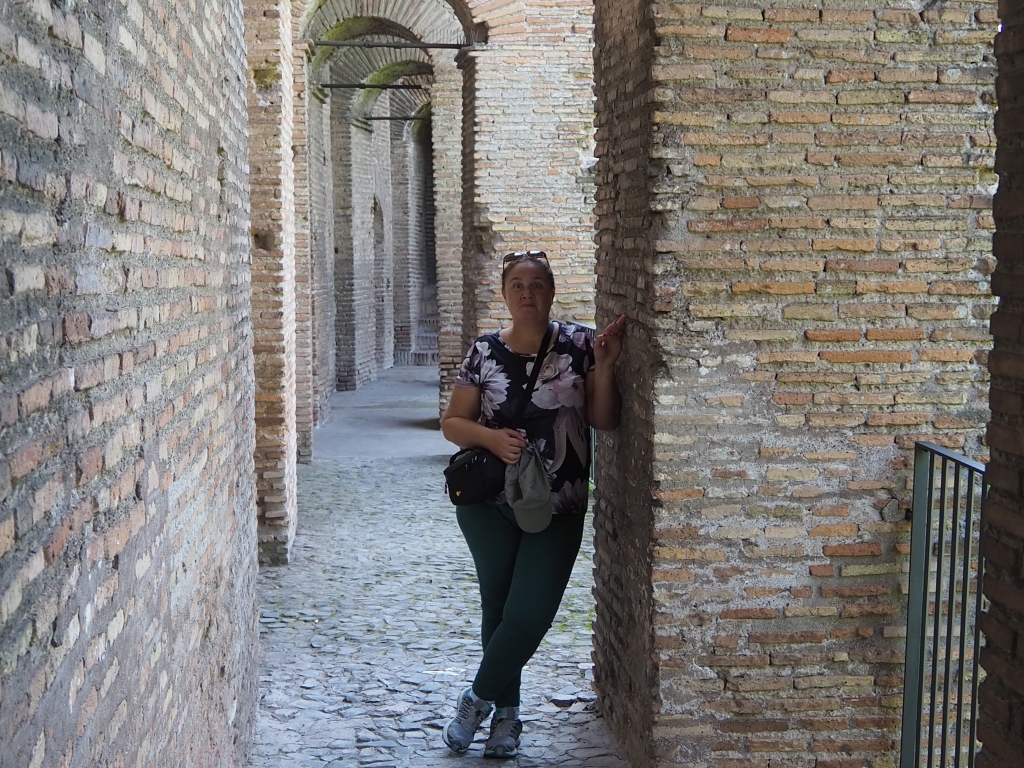
If you go further down the Via Appia Antica, you will discover that a part of it has been turned into a walking and cycling alley where there are no cars for sure. I enjoyed the walk although I don’t recommend it in a hot weather; there is not too much shadow. BUT it is right in this section where you find not one but two of the six Roman catacombs open to visitors. And this is something one has to see. I cannot compare the feeling to anything else though I probably just haven’t travelled enough. Due to the lack of time (again), we had to chose just one of the catacombs and we chose that of San Calistus or Calyxtus, somehow I didn’t quite catch the name. Unfortunately, photographing is forbidden inside, so I can only offer the scanned postcards which I bought outside:
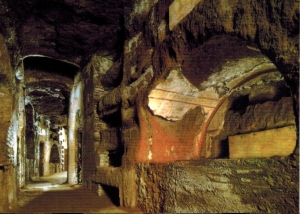
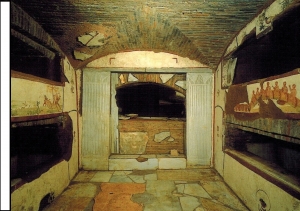
The left photo shows one of the corridors with funeral niches in the walls which make something like a labyrinth down there. Our guide was saying that the ban of photo-shooting was equally from respect to the dead and because some absent-minded tourists always fell behind the groups to take photos and got stranded. We were curious about how exactly did funerals go in this place, the niches being so close to each other; the guide told us they placed the bodies in the niches, put some quicklime in and then sealed the opening to isolate smells. The photo to the right shows that even here, some were more important than others – there were family tombs, decorated with paintings. The catacombs of San Calistus span four floors underground and over half a million Christians and Jews have been buried there.
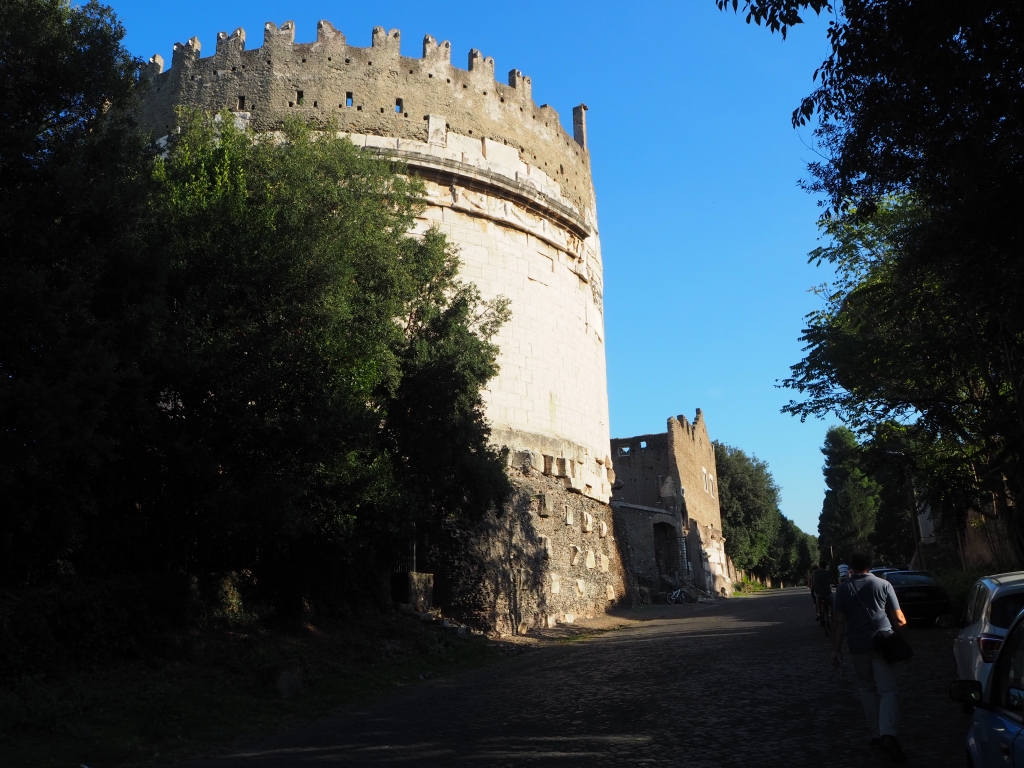
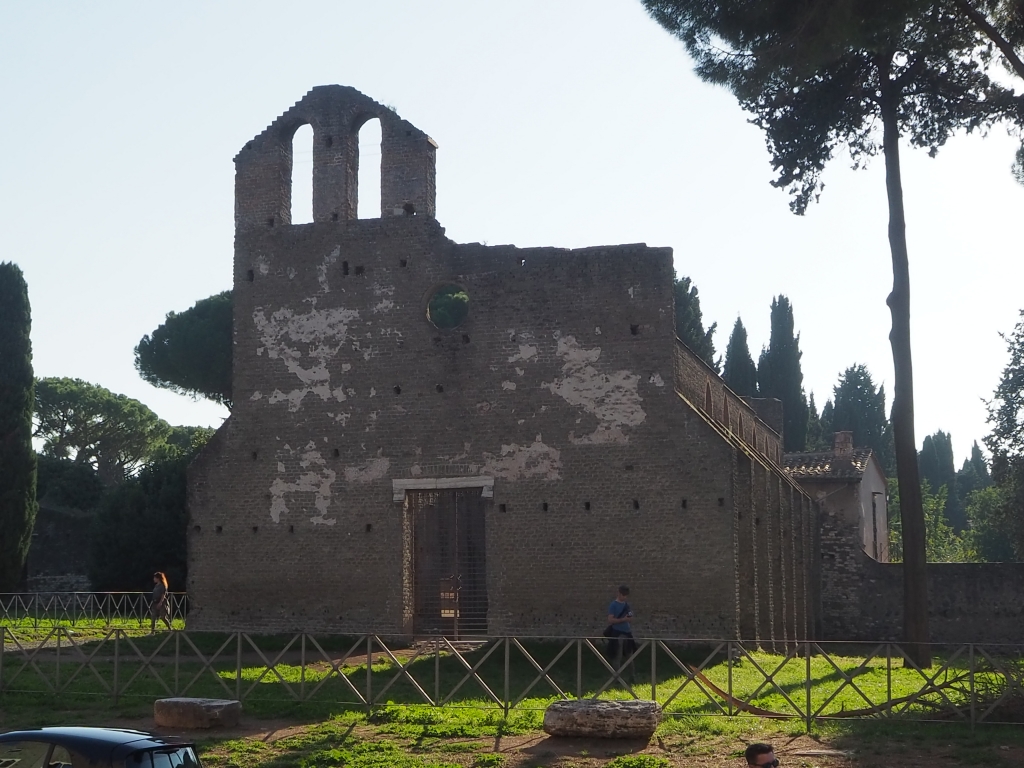
There is much more to see when you visit the Appian Way, as long as you don’t run out of time – as we, for example, were not let in the Villa of Maxentius because there was only one hour before the closing time. We could only peek through the fence and that was it. You will certainly pass by this former tomb of Cecilia Metella on the above photo who turned to be the wife of the son of Marc Crassus, himself a part of the First Triumvirate that ruled Rome before it was an empire, together with Caesar and Pompeii. How this wife won such a glorious tomb, however, no one told us. In some later medieval times, the tomb became the tower of a fortress built by the family of Caetani. According to Google, this family is known mostly for the securing of two popes and more than 10 cardinals for Roman history. Before you take the bus back to the center, you will also come accross the remains of the church of St. Nickolas which was built without a roof from the very beginning. Another of the charming peculiarities of the Eternal City.


Leave A Comment