
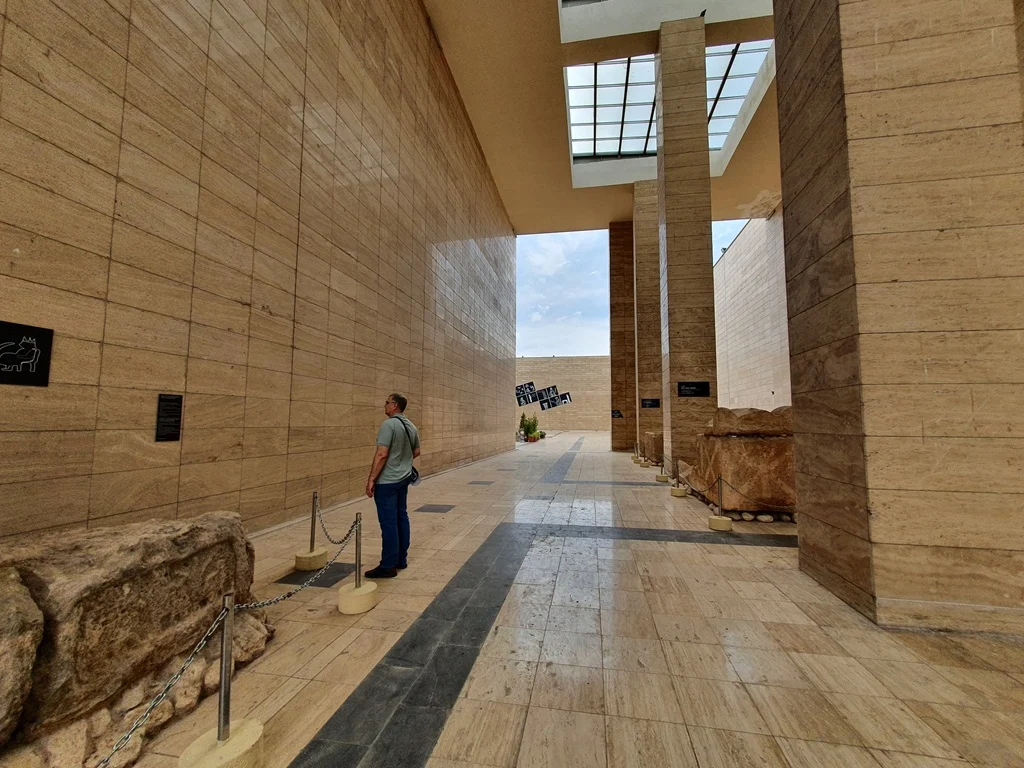
I wondered what title to give this museum – “The Amazing Museum of Urfa”? “The Wonderful Museum in Urfa”? “The Best Museum in Southern Turkey”? They all fit. Since I couldn’t decide, I just left it as it is. I first had the chance to visit it in 2022, and it left a wonderful impression on me. This year, I happened to visit twice, and I concluded that it is high time that I introduce you to it. To begin with, it is situated in a strategically convenient location near the Old Town of Urfa; it is easily accessible and housed in a specially-built structure featuring interesting interior and exterior architectural design.
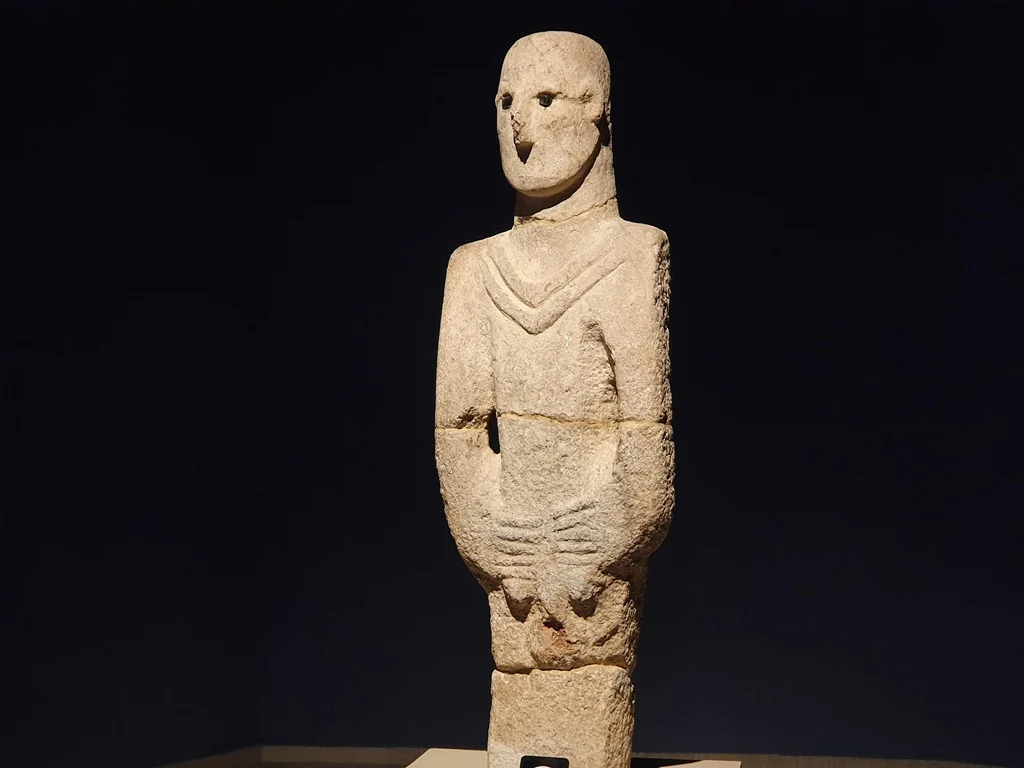
The walk through the past of the area begins in the Paleolithic. There you are greeted by the so-called Urfa Statue, which the hosts claim is the world’s oldest known life-size human-like sculpture. The figure definitely evokes male associations, although there is a hole in the place of the most recognizable male symbol. Which to me is strange, given the widespread deification of the feminine in prehistory. I couldn’t identify what the figure is holding in his hands, if you have any ideas, please share.
For me, the most fascinating period represented at the Historical Museum of Urfa is undoubtedly the Neolithic. This era encompasses the settlement-cult mounds – or “Taş Tepeler”, as they go collectively – such as Göbekli Tepe, Karahan Tepe, and others not yet open to visitors. It was during this period that prehistoric humans decided to settle down – that is, to stop chasing after food but build permanent dwellings, and begin domesticating animals and cultivating crops. In this bold undertaking, humans relied solely on what they could find in their natural surroundings: bones, teeth, and various types of stone.
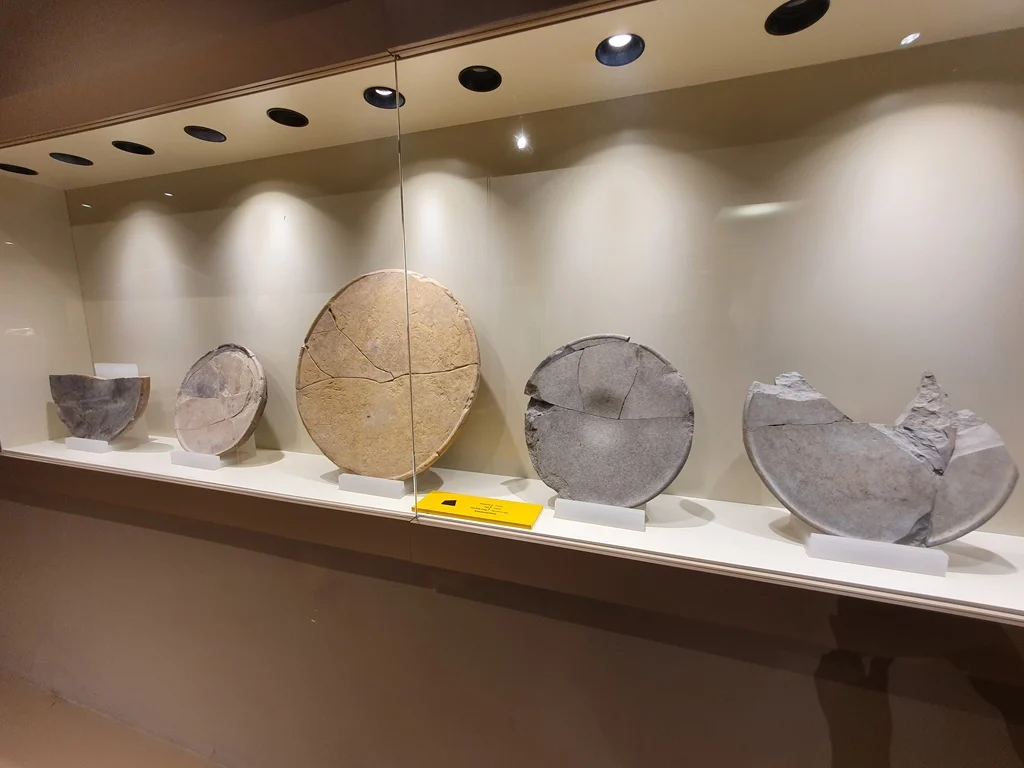
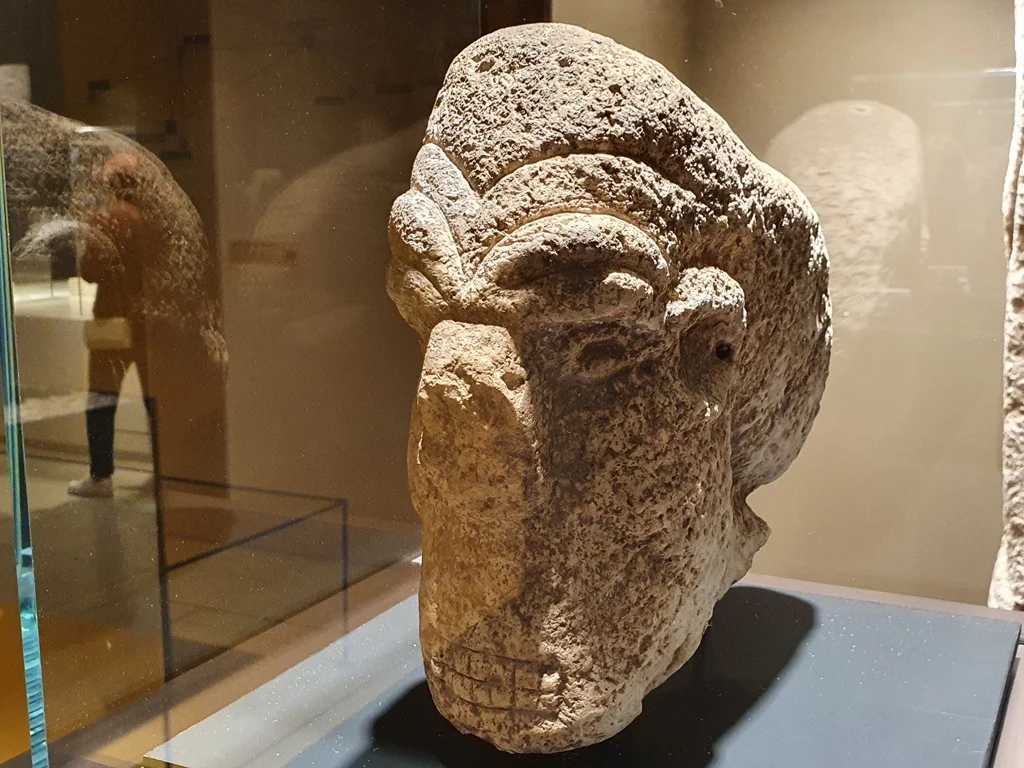
The above stone plates, for instance, are incredible. Even more remarkable are the sculptures from Karahan Tepe, which were crafted using stone tools. Some of them bear a striking resemblance to the ancient Egyptian concept of divine protection – depicted as a pharaoh seated on the lap of a patron deity. Here, too, small human figures are curled up in the laps of large animals. Personally, I was mostly drawn to the human heads; despite being heavily damaged by the passage of millennia, they still manage to forge a connection between modern humans and these distant ancestors of ours.
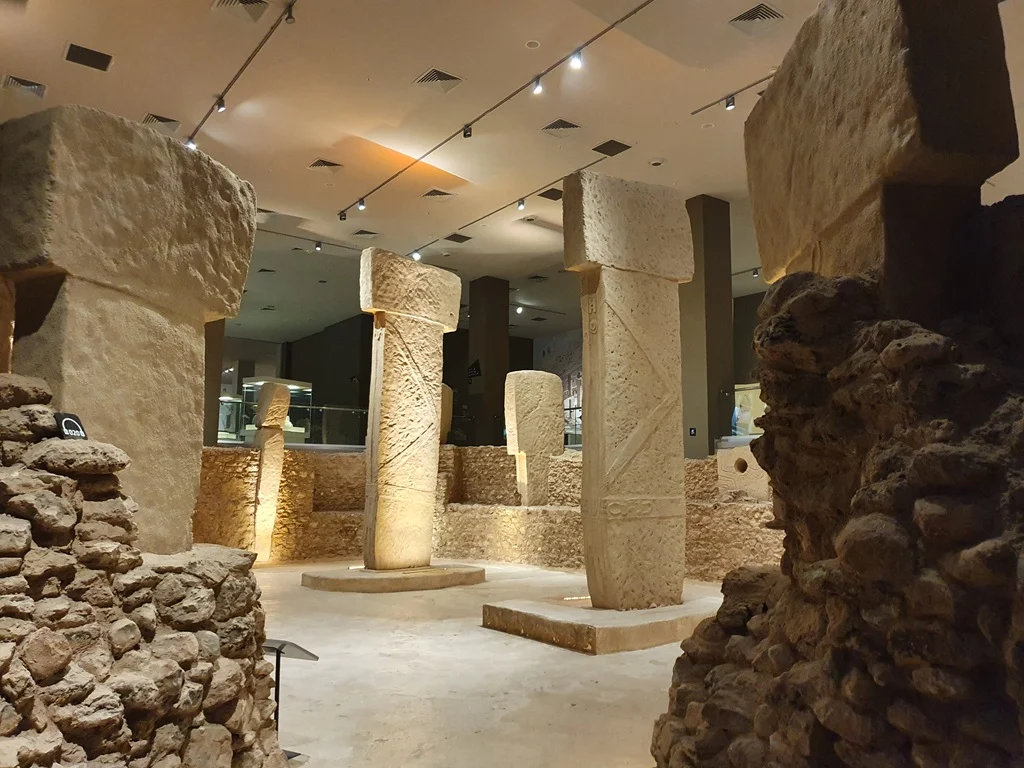
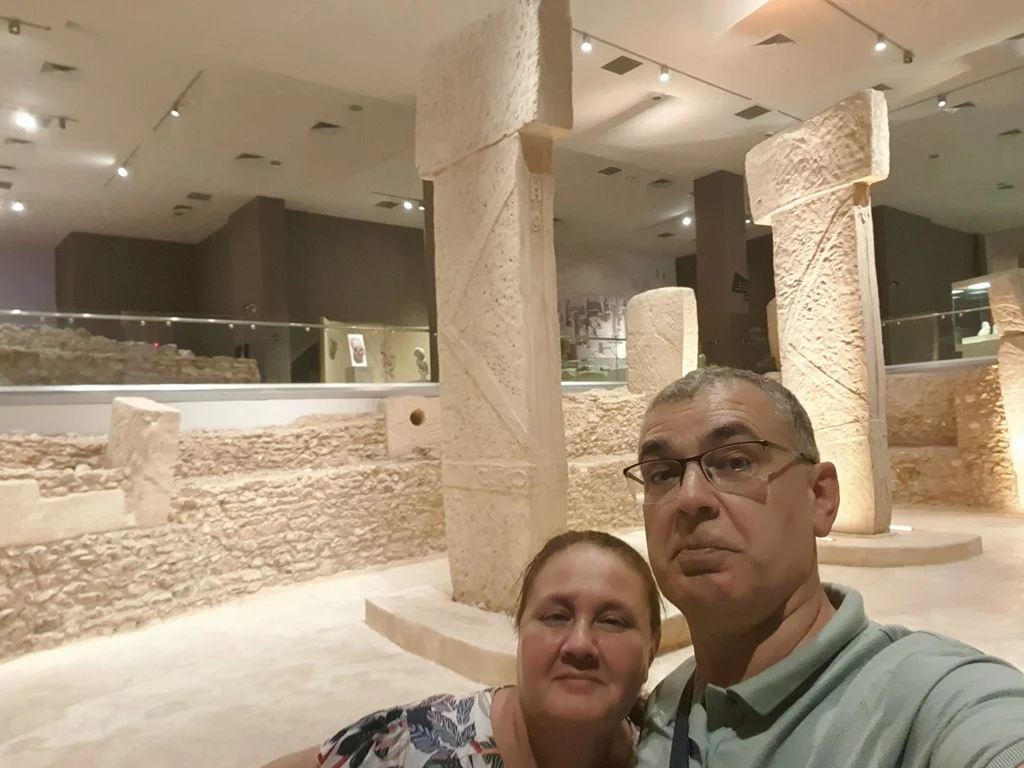
At the Historical Museum of Urfa, special attention – and rightly so – is devoted to Göbekli Tepe, a UNESCO World Heritage Site. Let us set aside the mystical theories regarding unknown forces, energy fields, aliens and the like; the site is astonishing even without them. Since access to the actual archaeological grounds has long been restricted to researchers – a measure taken to prevent damage, the museum has wisely recreated one of the cult circles in its original, full scale, allowing visitors to experience what it was like to stand among the monoliths.
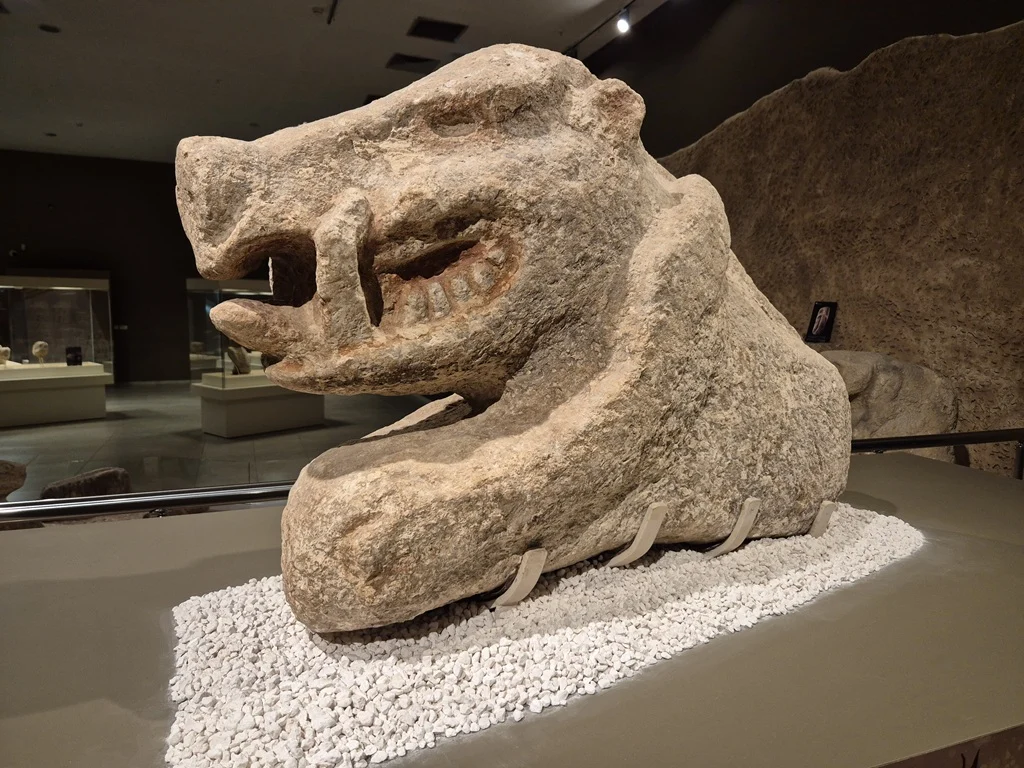
Furthermore, you have the opportunity to take a closer look at some of the sculptures that have been discovered. Unlike at Karahan Tepe, the focus at Göbekli Tepe is on zoomorphic, that is, animal forms. These were crafted with astonishing precision and mastery – and, I might add, without any tools other than stone (which itself had to be convinced it was harder than the stone being worked). It is difficult for me to even imagine the level of diligence and motivation required for even the simplest bas-relief; let alone for figures like this one:
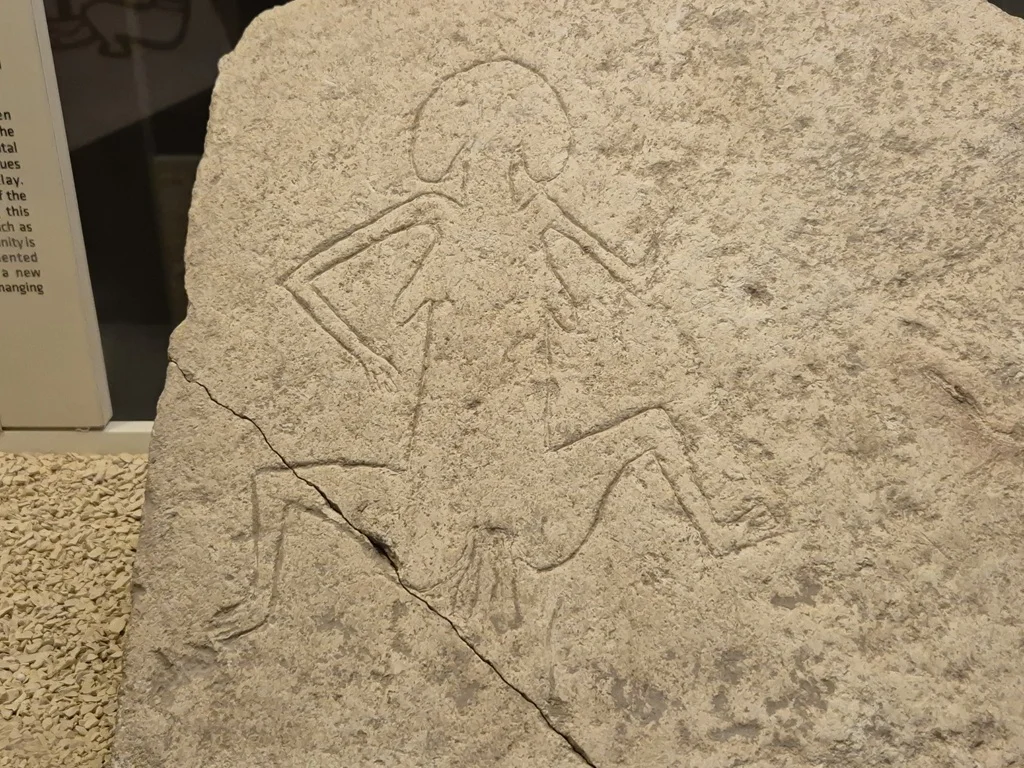
It has already been noted that the representation of Homo sapiens at these specific prehistoric sites shows a striking male bias, at least as far as the Paleolithic and Neolithic periods are concerned. A typical example is the cult circle at Karahan Tepe, which is filled with stone phalluses. However, there is a unique find from Göbekli Tepe, currently on display at the Historical Museum of Urfa, that features a rare female presence; arguably the only one discovered to date. The figure is carved into a stone bench situated between two of the ritual pillars and is believed to depict a woman giving birth.
Shortly thereafter, pottery and metalworking emerged, accompanied by a number of remarkable cultures. One of these, for instance, is the Uruk Culture of the 4th millennium BC, which left behind striking orange-red earthenware vessels and wall decorations composed of clay “nails.” The pointed end was driven into the still wet wall, leaving the “head” protruding; a multitude of these “heads” formed patterns and figures. During the Chalcolithic, meanwhile, a trend arose for peculiar idols, termed “eye idols” by scholars – though whether they actually represent eyes or something else entirely remains a matter of uncertainty.
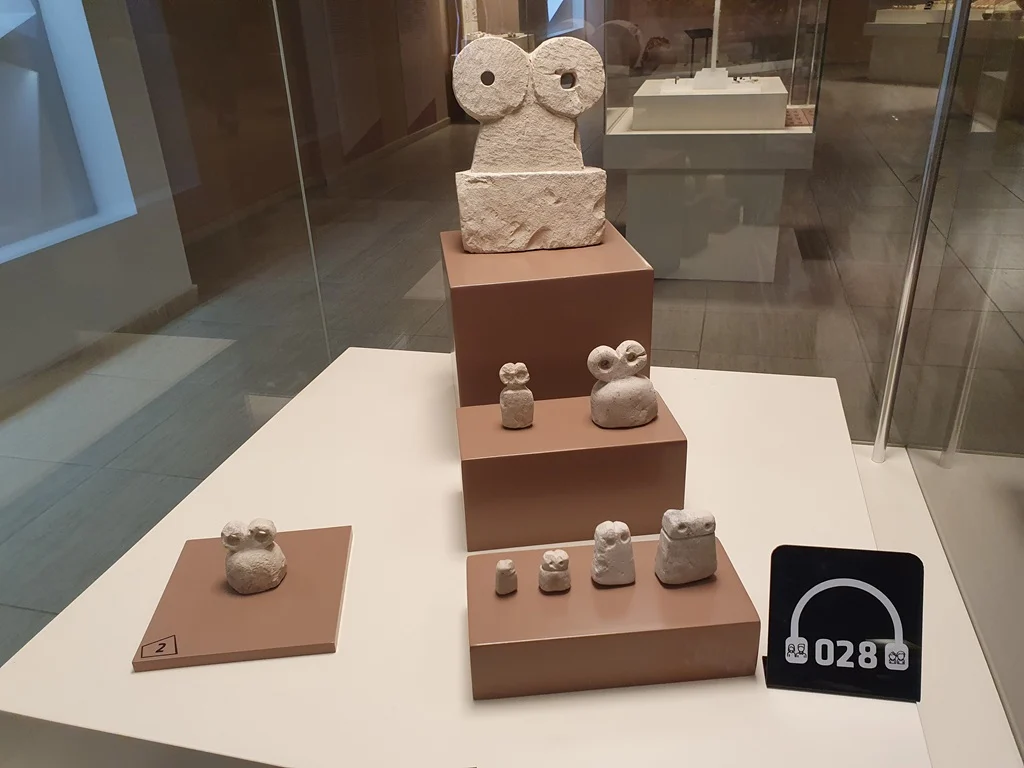
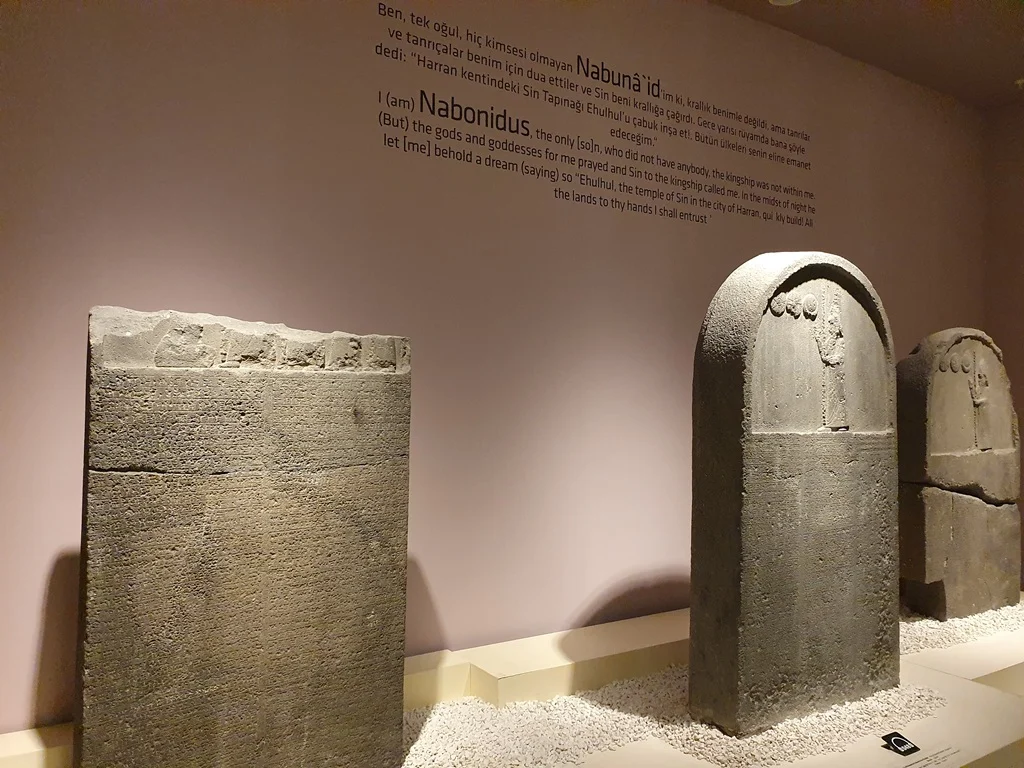
The tour of the Historical Museum of Urfa continues through subsequent eras, revealing even more treasures. I cannot – and do not wish to – show you everything, because you really ought to go and see it for yourselves. I have decided to share just two more highlights. One dates back to the post-Hittite period in Asia Minor, around 1000 BC. By this time, writing had emerged, alongside other hallmarks of civilization. Cuneiform clay tablets were common, inscribed so densely that just looking at them makes your eyes ache. But when you see the same thing carved into basalt, it’s not just your eyes that start to hurt. You’ll need to zoom in on the photo to understand what I mean.
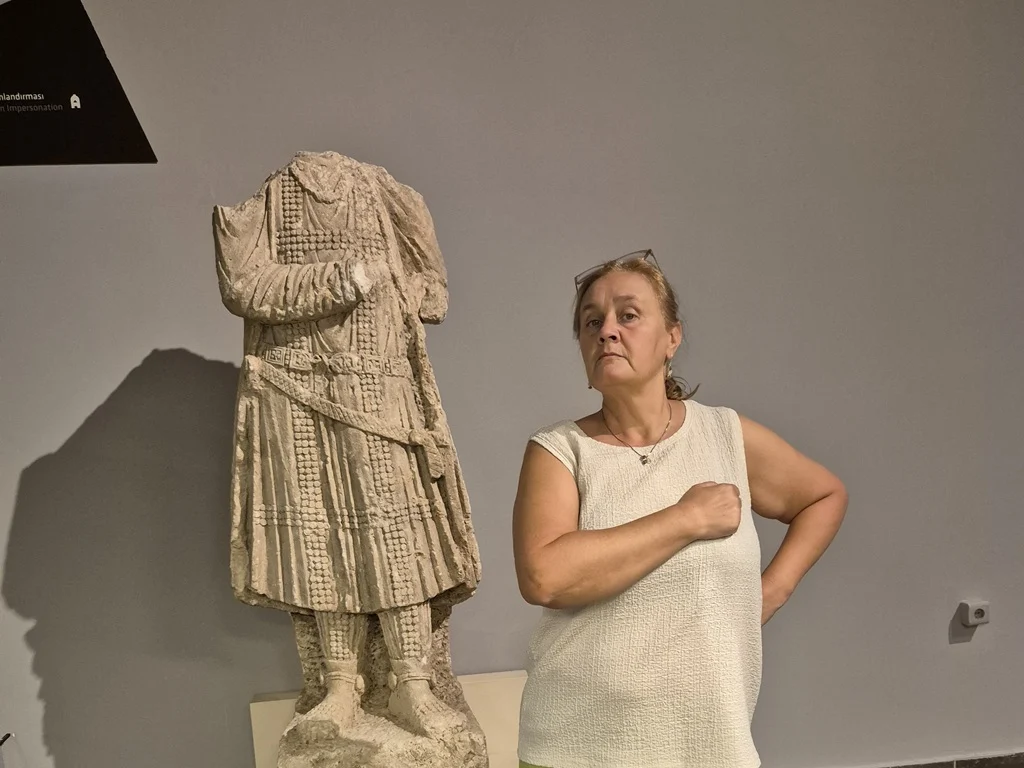
And one last thing for today from the Historical Museum of Urfa: if you’ve been following me for a while, you know about my enduring love for those ancient maniacs, the Romans. You’re probably also aware of the Roman Empire’s habit whenever they conquered a new land, they would inventorize local culture and -if they liked something – simply claim it as Roman. We’ve seen how Roman Petra was superimposed over the Nabataean one; it’s the same story here, though I find the statues of local “Romans” wearing togas paired with shalvari trousers absolutely amusing. Anyway, see you in Urfa!


Leave A Comment