
I set off for Göbekli Tepe in 2022 with high expectations. After all, it is a UNESCO site, the decor of movies, countless articles about mystical energies and extraterrestrials, and so on. At the very least, it represents a 12,000-year-old prehistoric legacy – if one can even fathom such a span of time. And it is not just this single site; the entire region surrounding the southern Turkish metropolis of Şanlıurfa is dotted with similar settlement mounds, known as Taş Tepeler. To be precise, there are 12 such sites currently undergoing archaeological excavation, with evidence suggesting the existence of several others.
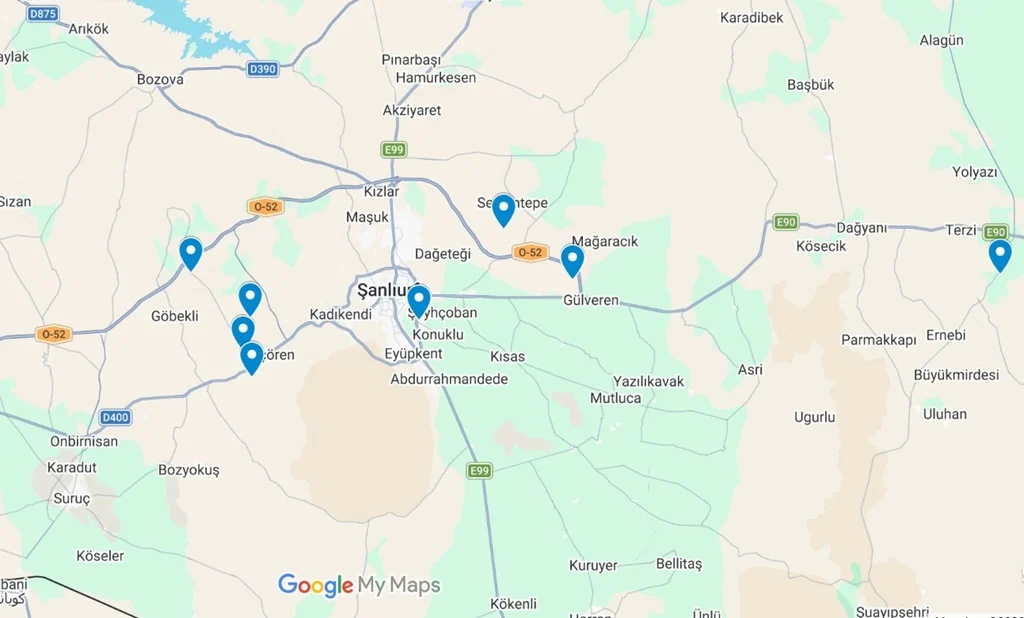
As you can see, not all of them are even marked on the map. But let’s start with the “big brother” of them all: Göbekli Tepe. The visit is organized very efficiently. If you arrive by car around the opening time, you might manage to park right next to the complex entrance; later on, the local Gendarmerie arrives and begins directing private vehicles to more distant parking lots, while shuttle buses appear to take you to the Visitor Center. During peak times, you might have to wait a little while.
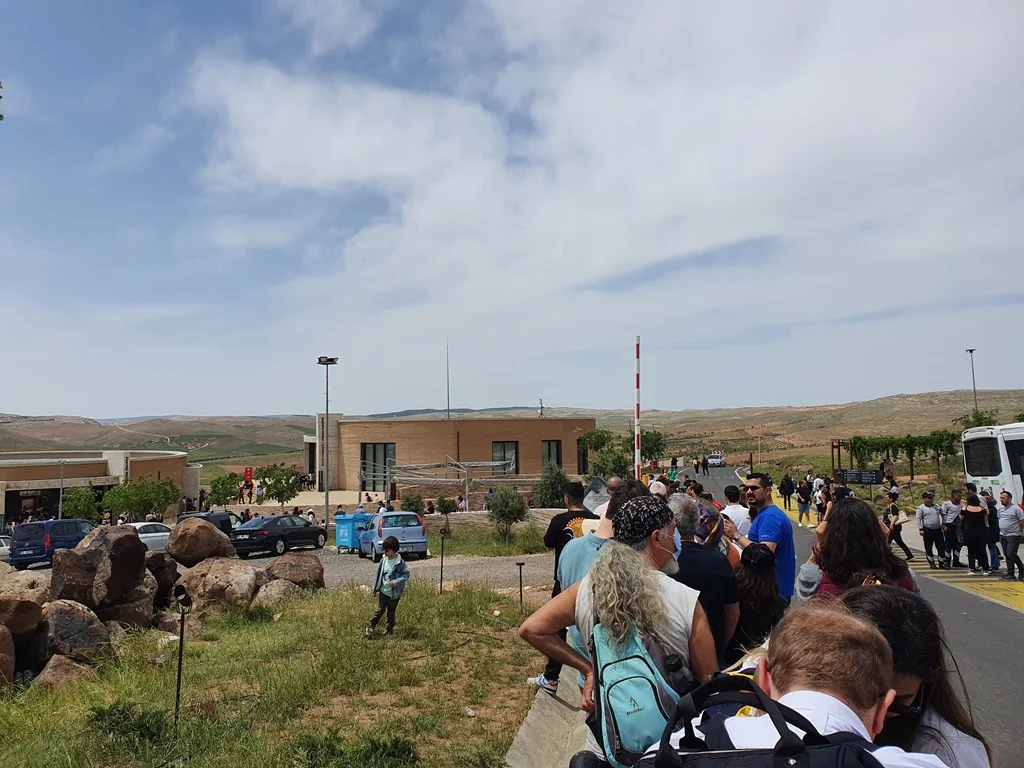
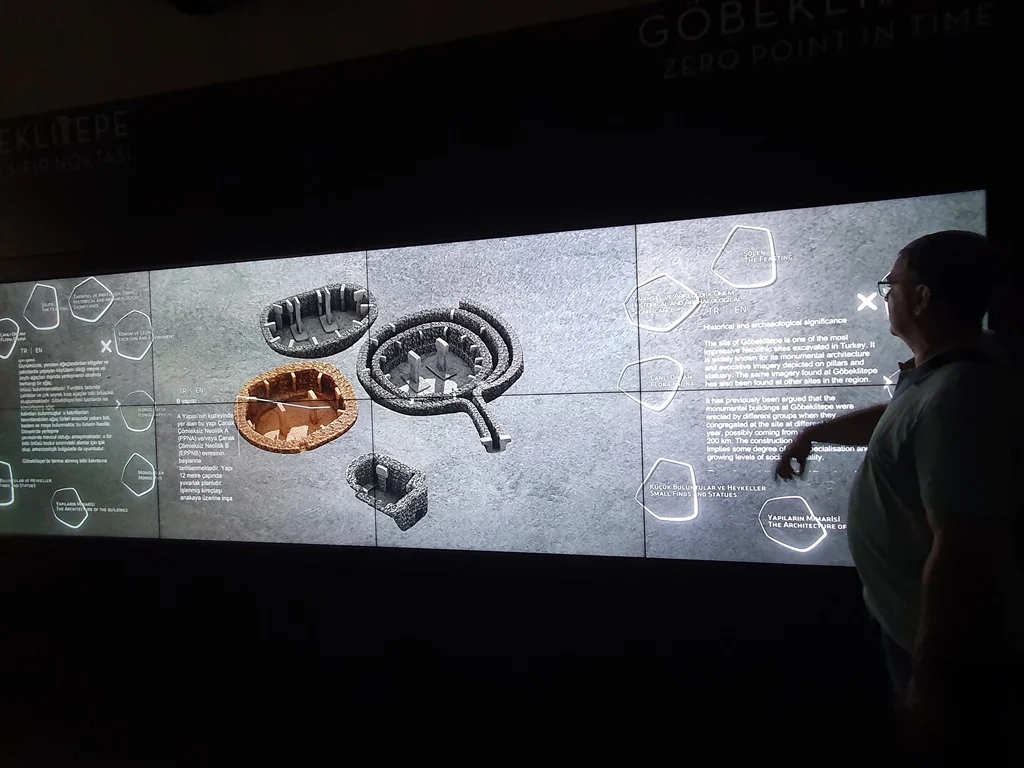
Or a little longer. The queue will lead you to the entrance of the Visitor Center and the ticket counter. From there, you enter the exhibition area, which recounts the history of the site, or at least what is known about it so far. When discussing events from such a distant past – especially in the absence of written records – most claims are necessarily based on assumptions. In this light, the interpretation presented at the Center is both logical and engaging; however, ongoing excavations may yet reveal new facts that could alter current theories.
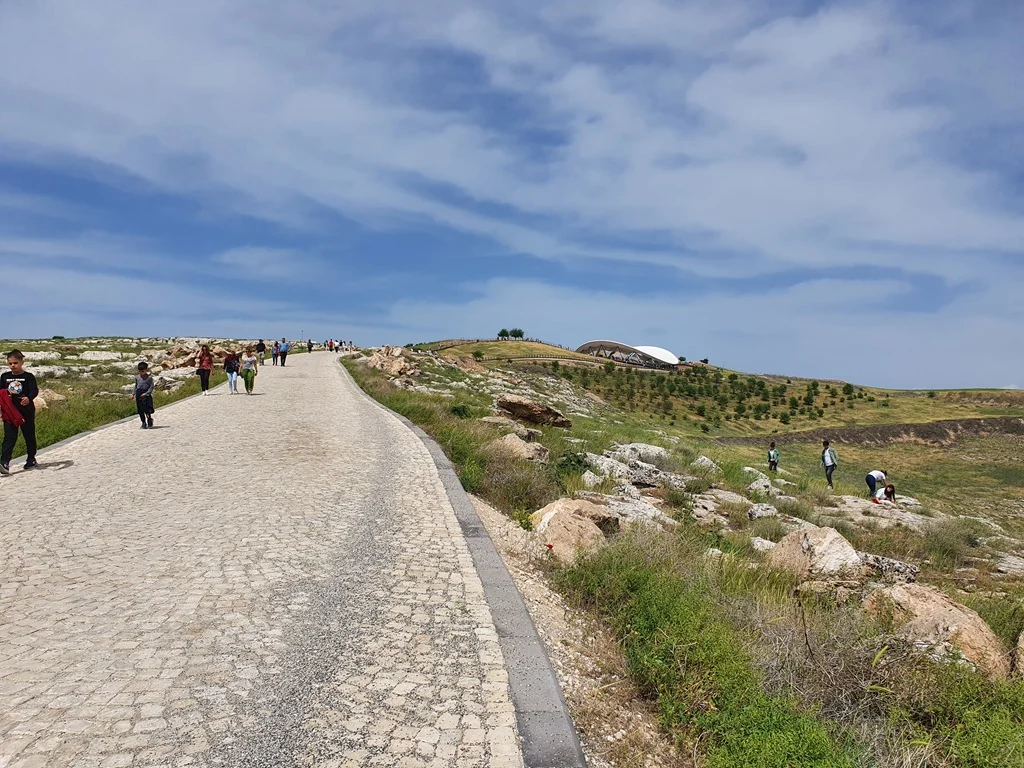
From the Göbekli Tepe Visitor Center, there is still some distance to cover to reach the main site. I say “main site” because the hill is actually much more extensive than the portion currently open to visitors. Excavations are ongoing across the entire area, and new sections are being prepared for public access in stages. You can reach the ridge via shuttle buses, which run in both directions throughout the day on a first come – first served basis. However, if you are visiting on a weekend or a holiday, I recommend walking the distance, provided it is not the height of summer or the hottest part of the day.
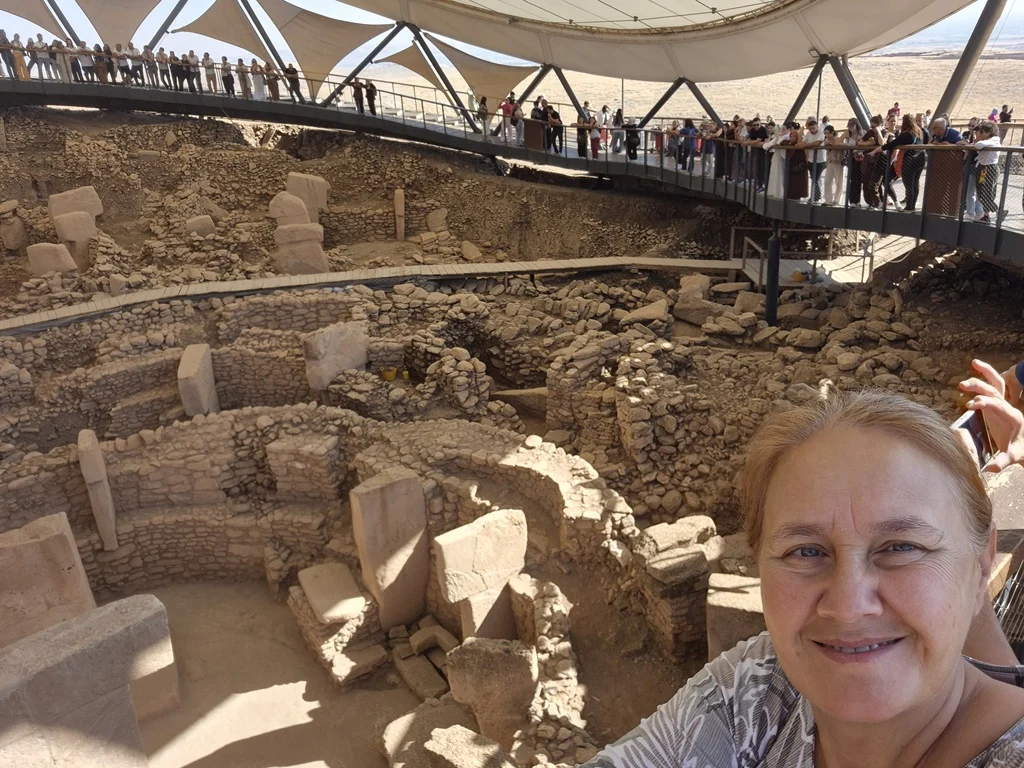
The main part of the site is sensibly laid out, featuring a circular walkway that provides a view of the excavations from above, along with a suitable canopy to protect both the archaeological remains and the visitors. Your first impression might be a bit disappointing – something along the lines of “Is this really it?” or “How am I ever going to see anything through these crowds?” Don’t let either thought get the better of you. The railed walkway ensures that everyone can find a good vantage point, though you might have to wait a little while. And if the site seems small given its global fame, simply allow yourself more time to explore. The secret lies in the details!
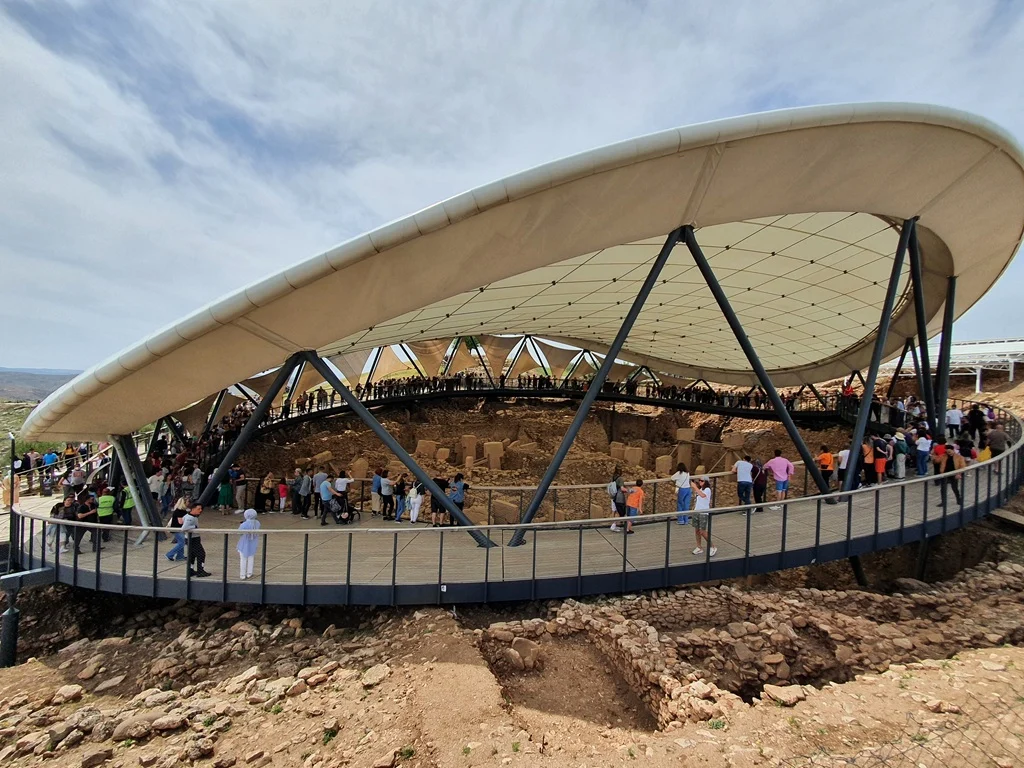
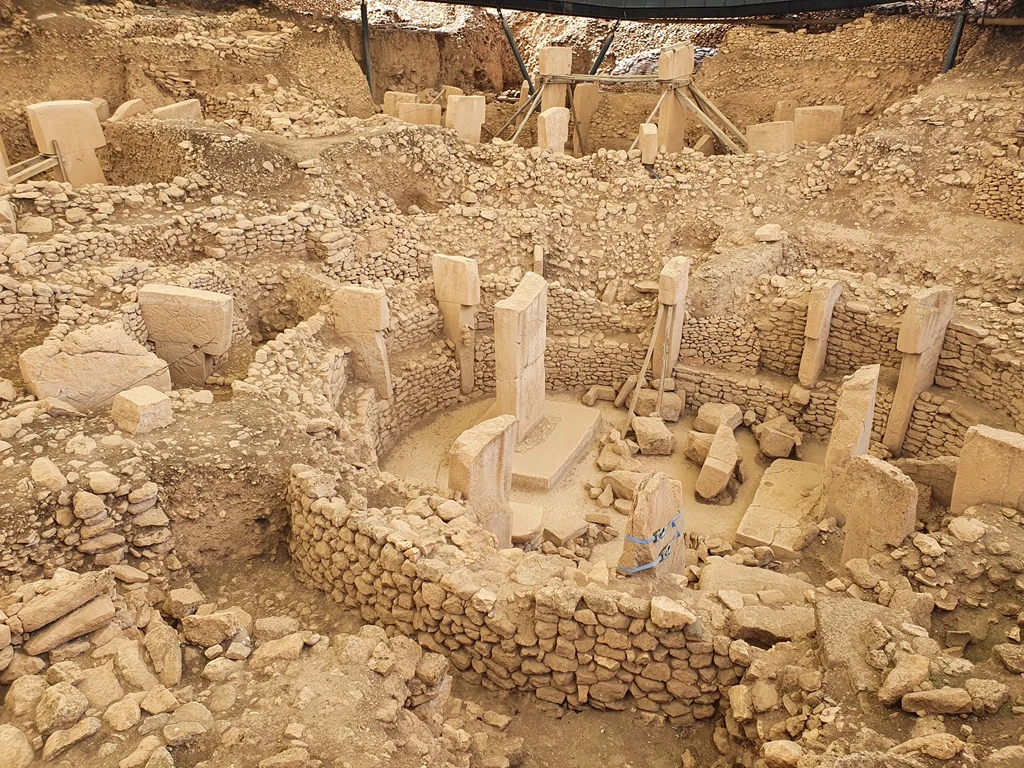
This part of Göbekli Tepe constitutes a cult complex composed of ritual “circles”. Each circle is enclosed by concentric walls of crushed stone, into which upright monolithic blocks are set. It is believed that all of these were T-shaped, though some have been destroyed by the passage of millennia. In the center of the circles stand free-standing monoliths – where they have been preserved – reaching heights of approximately 5.5 meters or more. Given that the construction of each circle would have required an immense, monumental effort, scholars suggest that these were sanctuaries belonging to clans – a task beyond the capacity of a single family alone.
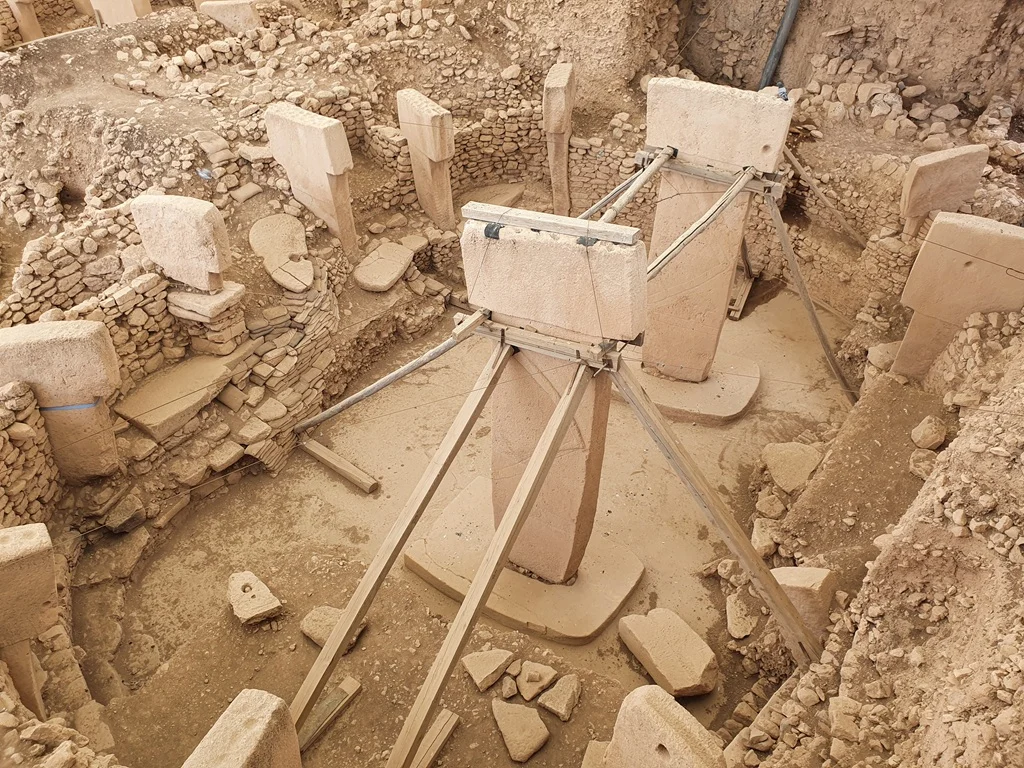
But let’s return to the details. If you look closely at any piece of monolith – whether standing or fallen – you will notice bas-relief decorations. Birds, reptiles, insects, and mammals of all kinds peer out from the stone surfaces. The skill of the prehistoric sculptors varies, and not all the forms are clearly recognizable, but the sheer effort required to create these bas-reliefs is mind-boggling. Changing your viewing angle will reveal new shapes. Take your time!
It is time to take a look at the “younger siblings” of Göbekli Tepe. The only other site currently open to visitors is Karahan Tepe, located about 50 kilometers to the east. No one asks for a ticket there yet, even though the small Visitor Center is fully operational and equipped with everything necessary. Excavations are in full swing, and the exhibited area is constantly expanding. In 2022, only one large circle was visible, along with an adjoining smaller one containing the site’s signature symbol – a human head carved into the rock ledge as if by magic.
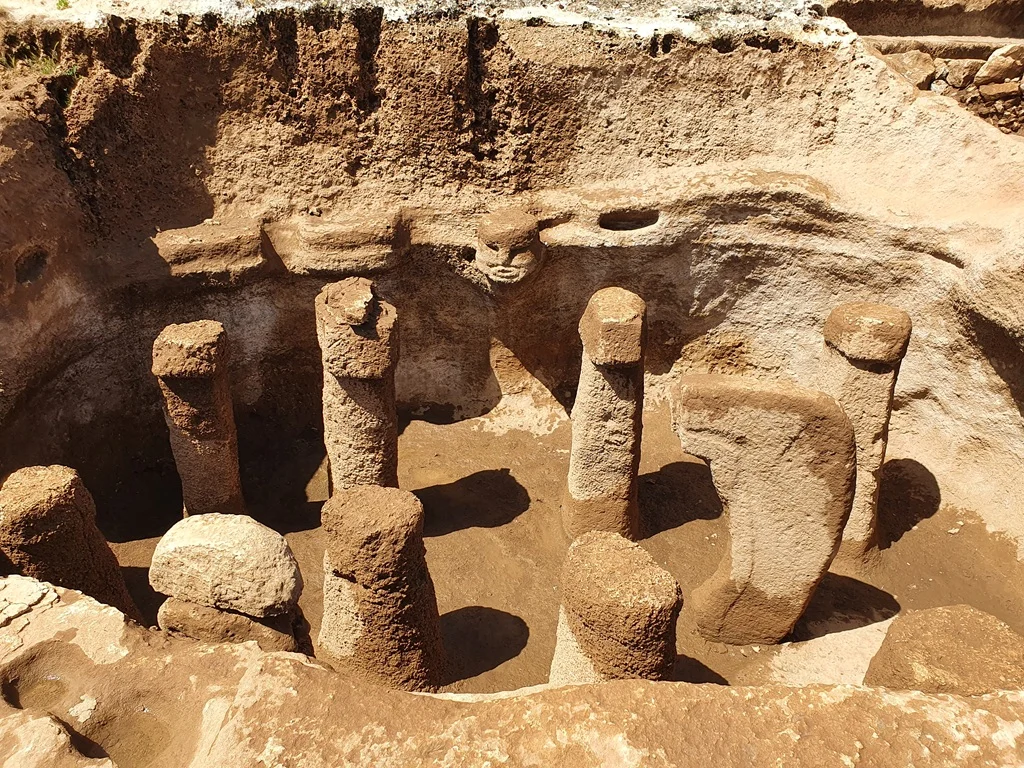
By 2026, a second large ritual circle and numerous dwellings containing smaller, “domestic” monoliths had already been uncovered at the site. While Göbekli Tepe is dominated by zoomorphic imagery, Karahan Tepe features primarily homomorphic (human) depictions. Given the scale of the mound, many more discoveries are expected here, making it well worth revisiting from time to time. Within the newly discovered large circle stands a remarkable statue, the purpose and meaning of which will likely be a subject of discussion for many years to come.
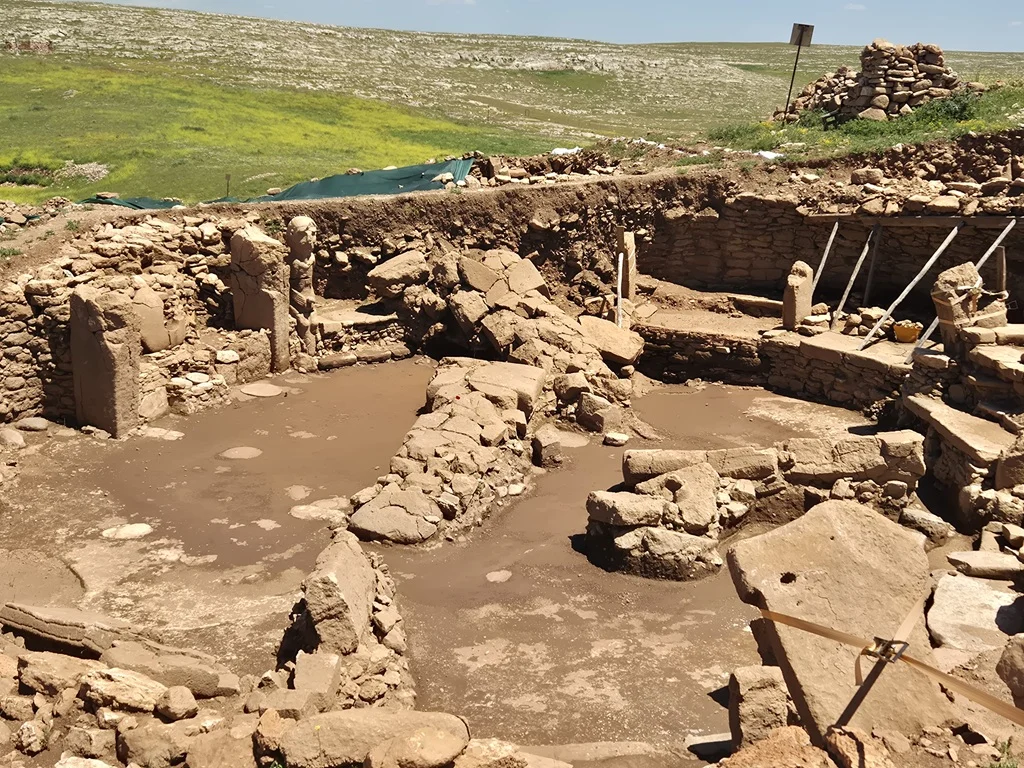
For a final treat, we managed to reach a site not yet open to the public – Sayburç, located west of Şanlıurfa. Situated in the middle of a village, it currently consists of a large shelter positioned at knee height. To see what lies beneath, you have to get into a “caterpillar” position and crawl through the surrounding weeds. Unfortunately, the most you will be able to discern is that there is definitely a connection between this site and the other ‘Tepes’ (mounds) as you will recognize the stone circles and the monoliths in the center, but that is about it. There is certainly much more to come from the Taş Tepeler!


Leave A Comment